

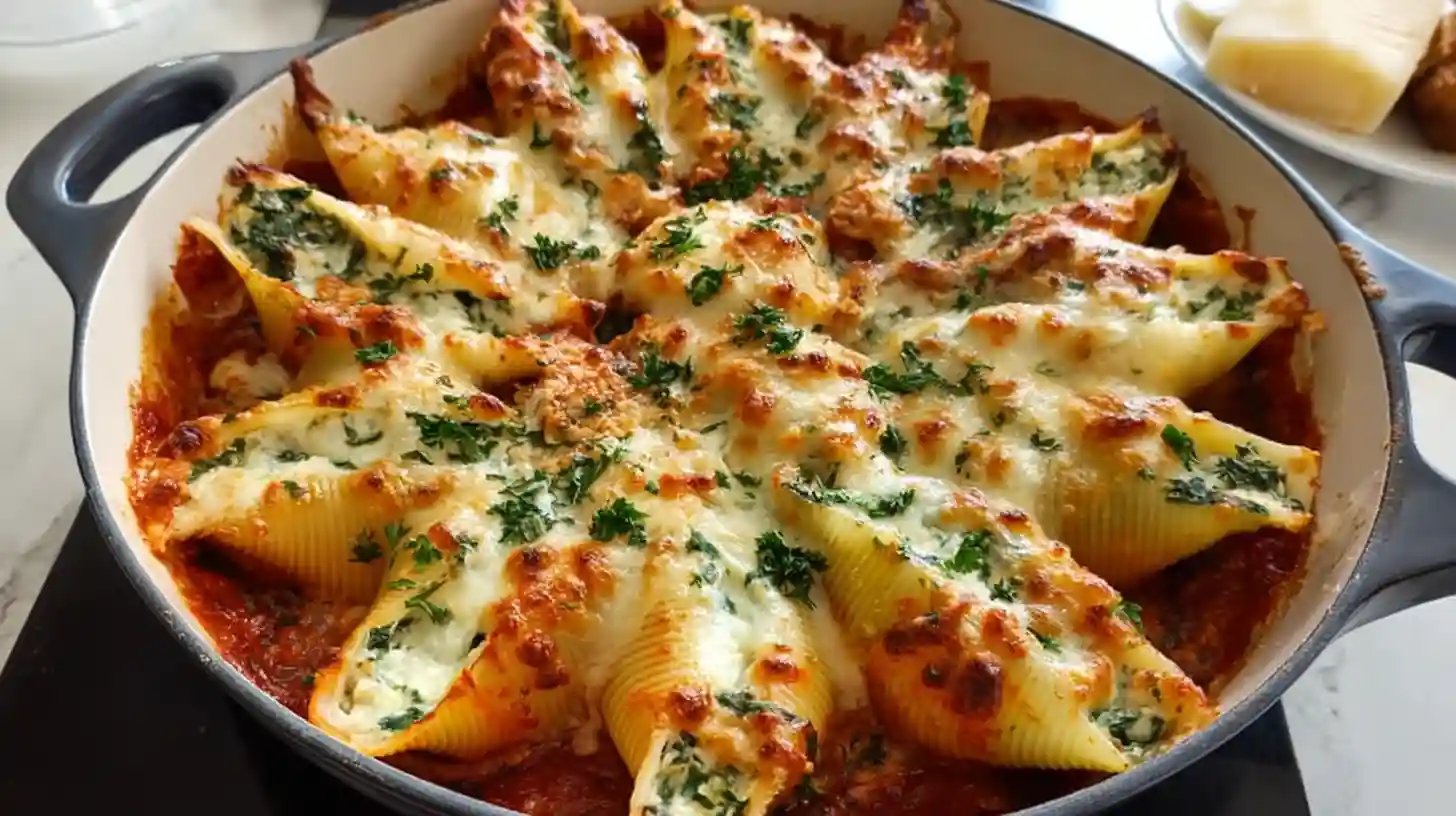
Stuffed Shells are one of those baked pasta dishes that look like they took significantly more effort than they actually did. Jumbo pasta shells filled with a seasoned ricotta and mozzarella mixture, nestled into marinara, blanketed with more cheese, and baked until everything is bubbly and the top is golden in patches. The filling comes together in about 5 minutes, the shells are easy to handle once cooked, and the whole pan goes into the oven while you clean up the prep dishes. This is a flavorful stuffed shells recipe that works on a Tuesday just as well as it does when you need to feed a group.
Slightly undercooking the shells before stuffing is the one prep detail that makes the biggest difference in the finished texture. They soften further in the oven and a fully cooked shell tears easily when filled, which makes the assembly more frustrating than it needs to be.
Stuffed Shells Ingredients
Shells and Sauce
- 20 to 24 jumbo pasta shells, plus a few extra in case some tear during cooking
- 1 jar (24 oz) marinara sauce, divided
- 1/2 cup water mixed into the marinara
Ricotta Filling
- 2 cups whole milk ricotta cheese
- 1.5 cups shredded mozzarella, divided
- 1/2 cup grated parmesan cheese
- 1 large egg
- 2 cups fresh baby spinach, roughly chopped, optional but recommended
- 2 garlic cloves, finely minced
- 1 tsp Italian seasoning
- 1/2 tsp onion powder
- 1/4 tsp nutmeg
- Salt and black pepper to taste
- Fresh basil for garnish
How to Make Stuffed Shells Step by Step
Cook the shells in heavily salted boiling water for 2 minutes less than the package time. They should bend without snapping but still have visible firmness when you bite one. Drain them and lay them out in a single layer on a lightly oiled baking sheet or piece of parchment. Spacing them out prevents them from sticking together while you prepare the filling. A shell that fuses to its neighbor while cooling has to be pulled apart and usually tears at the opening, making it impossible to stuff cleanly.
- Preheat oven to 375°F. Spread about 1 cup of marinara mixed with 1/2 cup of water across the bottom of a 9×13 baking dish. The water thins the sauce slightly so it doesn’t scorch under the shells during the covered baking phase.
- Mix ricotta, 1 cup of shredded mozzarella, parmesan, egg, minced garlic, Italian seasoning, onion powder, nutmeg, salt, and pepper in a large bowl until fully combined. Fold in chopped spinach if using. The egg binds the filling so it holds its shape inside the shell during baking rather than liquefying and seeping out into the sauce.
- Fill each shell using a spoon or a piping bag. A small zip-lock bag with one corner snipped works well as an improvised piping bag and gives more control than a regular spoon for getting filling deep into the shell without overfilling the opening. Each shell holds about 2 heaping tablespoons of filling. Do not pack them so tightly that the shell splits at the seams.
- Arrange filled shells in a single layer over the sauce in the baking dish, open side up. Nestle them close together so they support each other and don’t tip over during baking. Pour the remaining marinara evenly over the tops of all the shells. Scatter the remaining half cup of mozzarella across the sauce layer.
- Cover the dish tightly with foil and bake at 375°F for 30 minutes. Remove the foil and bake an additional 10 to 15 minutes until the cheese on top is melted, golden in spots, and the sauce is visibly bubbling around the edges of the pan. Rest 5 minutes before serving. Scatter fresh basil across the top just before plating.
Filling Variations for Different Dinner Ideas
For stuffed pasta shells dinner with meat, brown 1/2 lb of ground beef or Italian sausage and let it cool before folding it into the ricotta mixture. Drain the fat thoroughly since excess grease in the filling makes the ricotta loose and causes the filling to seep during baking. Ground sausage adds enough built-in seasoning that you can reduce the Italian seasoning in the filling to 1/2 teaspoon without the shells tasting underseasoned. For a summery stuffed shells variation, swap the spinach for 1 cup of finely diced zucchini that has been salted, drained, and patted dry to remove excess moisture before mixing into the filling.
A vodka sauce or a roasted garlic cream sauce in place of marinara changes the entire character of the dish without any other adjustments needed. The filling works with both and produces a richer, more restaurant-adjacent result for dinner recipes stuffed shells occasions where something slightly more elevated than the standard marinara version fits the moment better.
Make-Ahead, Storage, and Reheating
Stuffed shells are one of the best make-ahead pasta dishes available since they hold their structure well after assembly and the flavors deepen overnight in the refrigerator. Assemble the full dish up to 24 hours ahead, cover tightly with plastic wrap, and refrigerate unbaked. When ready to bake, remove plastic, cover with foil, and add 10 to 15 minutes to the covered baking time since the dish starts cold. For storage after baking, refrigerate leftovers in an airtight container for up to 4 days. Reheat individual portions covered with a damp paper towel in the microwave in 60-second intervals at medium power, or warm the full dish covered with foil at 325°F for 20 minutes. The shells soften slightly after the first day but the flavor improves as the filling and sauce continue to meld.
FAQ
Can I freeze stuffed shells before baking?
Yes. Assemble the shells in the baking dish, cover tightly with plastic wrap and then foil, and freeze for up to 2 months. Thaw overnight in the refrigerator before baking. Bake covered at 375°F for 45 minutes from cold, then remove the foil and bake another 10 to 15 minutes until the cheese is golden and the sauce is bubbling. The shells hold up well through freezing since the pasta shell protects the filling during the freeze-thaw cycle better than most pasta formats do. Fully baked shells can also be frozen individually once cooled, wrapped in plastic, and stored in a freezer bag for up to 2 months for the stuff pasta shells recipe meal prep approach.
Why does my ricotta filling seem watery after baking?
Three things cause watery ricotta filling. First, using low-fat or part-skim ricotta instead of whole milk, since the lower fat version releases significantly more liquid during baking. Second, skipping the egg, which binds the filling and prevents it from becoming liquid as it heats. Third, adding spinach that wasn’t properly dried before mixing in. Fresh spinach should be chopped and then pressed between paper towels to remove as much moisture as possible before folding it into the filling for this stuffed pasta shells recipe. Frozen spinach needs to be thawed completely and then squeezed very firmly in a clean kitchen towel to remove all the excess water before using.
How many shells should I cook for a full 9×13 dish?
Plan for 20 to 24 shells for a standard 9×13 dish, but always cook 4 to 6 extra. Some shells tear during boiling or break at the opening when being removed from the pot, and having extras means the baking dish still gets filled completely without hunting for undamaged shells at the last minute. Jumbo shells are notoriously inconsistent, with some splitting along a seam during cooking even when the timing is exactly right. A few extra shells cooked beyond what you need costs almost nothing and removes all the stress from the assembly step of any dinner ideas stuffed shells approach.
Can I substitute cottage cheese for ricotta?
Cottage cheese works as a direct substitute and produces a slightly lighter, less rich filling. Use small-curd cottage cheese and drain it through a fine mesh strainer for 15 minutes before mixing to remove excess liquid, which is more abundant in cottage cheese than in ricotta. The texture of the baked filling is slightly more granular than ricotta but the flavor difference is subtle once the garlic, parmesan, and mozzarella are mixed in. Full-fat cottage cheese produces a closer result to whole milk ricotta than the low-fat version and is the better choice for maintaining a creamy interior texture in the finished shell dinner recipes.
Should I cover the dish while baking?
Yes for the first 30 minutes, then uncovered for the final 10 to 15 minutes. Covering the dish with foil during the initial bake traps steam that heats the shells evenly and prevents the tops from drying out before the filling has warmed through completely. Removing the foil for the final portion of baking allows the mozzarella to brown and the sauce to reduce and thicken at the edges, which gives the finished dish its baked pasta appearance and texture. Skipping the foil entirely and baking uncovered throughout produces dry shell edges and rubbery cheese on top before the centers of the shells are fully heated in the flavorful stuffed shells recipe format.
Stuffed Shells
Ingredients
Equipment
Method
- Preheat oven to 375°F. Spread 1 cup marinara mixed with 1/2 cup water across the bottom of a 9×13 baking dish.
- Cook shells in heavily salted boiling water 2 minutes less than package time. Drain and lay flat in a single layer on oiled parchment to cool.
- Mix ricotta, 1 cup mozzarella, parmesan, egg, garlic, Italian seasoning, onion powder, nutmeg, salt, and pepper until combined. Fold in spinach if using.
- Fill each shell with about 2 heaping tablespoons of filling using a spoon or piping bag. Arrange open side up in the baking dish over the sauce layer.
- Pour remaining marinara over the shells. Top with remaining 1/2 cup mozzarella. Cover tightly with foil and bake 30 minutes. Remove foil and bake 10 to 15 more minutes until golden and bubbly. Rest 5 minutes, then garnish with fresh basil and serve.
Notes
- Cook shells 2 minutes less than package time – they finish softening in the oven and fully cooked shells tear during stuffing.
- Lay drained shells flat and separated on parchment so they don’t stick together while you prepare the filling.
- Always use whole milk ricotta and include the egg – both prevent watery filling after baking.
- Press spinach dry between paper towels before adding to the filling to avoid excess moisture in the finished shells.
- Assemble up to 24 hours ahead and refrigerate unbaked – add 10 to 15 minutes to covered bake time when starting cold.


